OEM & ODM Guides
Which Oral Care Segment Should a New Brand Enter First? A Four-Question Test
Braces wearers, general households, travel buyers or gift buyers: the first segment decides the nozzle set, the tank and the box. A four-question test for choosing it.
Quick answer
The first segment a new oral care brand enters decides more than the marketing. It decides which nozzle set goes in the box, how large the tank needs to be, whether the product travels, and what the first line of the packaging has to say.
Of the four segments we see most often, the orthodontic one is usually the strongest first move for a brand with no existing oral care distribution. Not because the product is better for those customers, but because that segment arrives with an external party already recommending the category, which removes the hardest part of selling a new product: explaining why it exists.
That is a market observation, not a clinical one. Whether any individual should use a water flosser, and at what setting, is a question for their dental professional. What a brand can decide is which customers to design for, which is the subject here.
Below is the four-question test we use when a brand asks which segment to enter first, the four candidate segments scored against it, and the configuration each one implies.
1. Why the first segment matters more than the first product
A new brand usually starts by choosing a product. It is the more visible decision, and it feels more concrete. The segment choice sits behind it and shapes it, which is why getting the order wrong is expensive.
The segment decides the nozzle set. A general-household product can ship with a standard nozzle and a spare and be complete. An orthodontic product without an orthodontic nozzle is a product that does not serve the customer it was bought for.
The segment decides the tank. Someone using the device at a bathroom basin every night will tolerate a larger body. Someone carrying it in a wash bag will not. The same reasoning decides whether the product needs a mirror, a travel cap, or a smaller footprint.
The segment decides the packaging claim, which is where most of the risk sits. A segment with a referring professional allows a factual, accessory-level description. A segment without one pushes a brand toward benefit language it cannot support, which is exactly where new oral care brands get into trouble.
In our experience the brands that struggle at launch are rarely the ones that picked a mediocre product. They are the ones that picked a segment they could not describe without overclaiming.
2. The four-question test
The test below is deliberately short. Four questions, each answerable before a sample is ordered, and each one eliminating a segment rather than ranking it.
Question one: does this segment arrive with a recommendation? A segment where a professional, a clinic or a retailer already tells the customer the category exists requires far less education than one where the brand has to create the need. This is the single strongest predictor of first-year traction in our experience, and it is the reason the orthodontic segment scores well.
Question two: can the product be described factually to this segment? If serving the segment requires a claim about an outcome rather than a description of an accessory, the segment is a compliance problem wearing a market opportunity's clothes. Accessory descriptions travel safely into packaging. Outcome claims do not.
Question three: does the segment reuse the configuration you would build anyway? A segment that needs a different body, a different tank and a different nozzle set is effectively a second product. A segment that is served by the same platform with a different nozzle in the box is a line extension, and it is much cheaper to test.
Question four: is the segment reachable through the channels you already have? A segment that lives on marketplace search behaves differently from one that buys through dental clinics or specialist retailers. The channel decides the artwork, the price architecture and the support material long before it decides the product.
A segment that fails question one or two is out. A segment that passes both but fails three or four is a candidate for a second product, not a first one.
3. The four segments, scored
Here are the four segments we most often discuss with brands, scored against the test on a simple three-point scale: strong, workable, weak. The scores are our read of the market, not a claim about any particular customer.
Orthodontic households, meaning families where at least one member wears fixed braces. Recommendation: strong, because an orthodontist is already in the conversation. Factual description: strong, because the accessory can be described by shape and purpose. Configuration reuse: strong, since a compact body with an orthodontic nozzle in the set serves it. Channel reach: workable, because it spans marketplace search and clinic-adjacent retail. This is the segment that most often produces a defensible first launch.
General households, meaning a shared bathroom where one device serves several adults. Recommendation: workable, since the category is familiar but nobody is actively recommending it. Factual description: strong. Configuration reuse: strong, since this is the default configuration. Channel reach: strong, because it is the broadest marketplace segment. The weakness is differentiation: a general-household product competes on price against everyone else's general-household product.
Travel and portable buyers, meaning people who want oral care away from home. Recommendation: workable. Factual description: strong, because portability is a factual property. Configuration reuse: weak, because it pushes toward a smaller tank and a different body. Channel reach: workable. This segment is usually better as a second product than a first one, since it asks for a configuration the brand has not built yet.
Gift and seasonal buyers, meaning purchases made for someone else. Recommendation: weak, because nothing in the segment recommends the category and the buyer is not the user. Factual description: workable. Configuration reuse: workable. Channel reach: strong in season and poor outside it. This segment rewards packaging far more than product, which makes it a poor place to learn what customers actually want.
Read as a table, the pattern is that segments with an external recommender and a factual description score well, and segments that require the brand to create demand score poorly for a first launch. That is the whole test in one sentence.
4. What the orthodontic segment actually requires
If the orthodontic segment scores highest, it is worth being specific about what serving it costs, because the requirements are concrete and mostly decided before tooling.
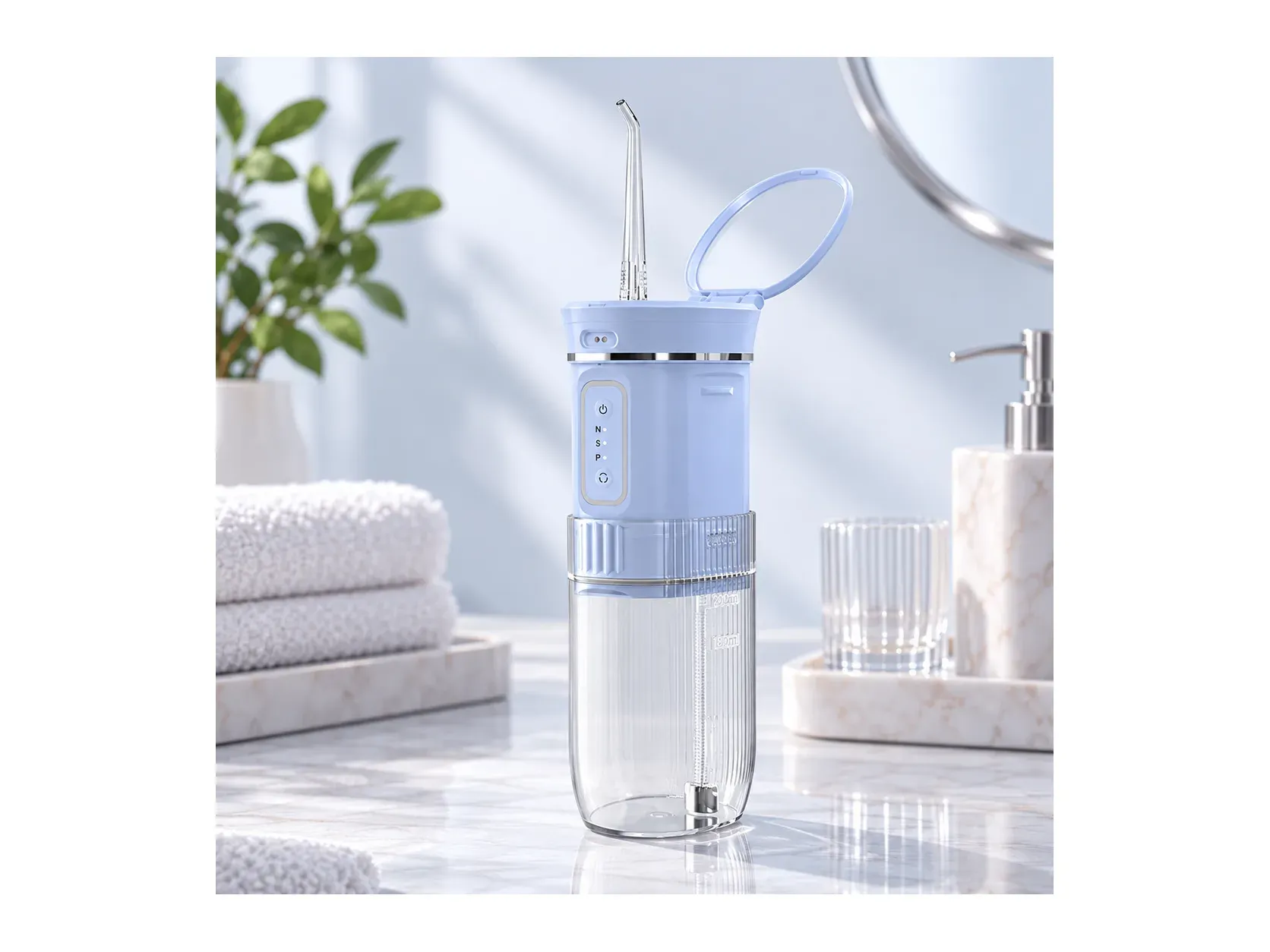
It requires the right nozzle in the box. Our compact model names all four of its nozzles, one of them orthodontic, which is the configuration that makes this segment addressable without building a new body. The countertop model is specified as four nozzle types without the names, and that gap becomes visible the moment packaging copy has to explain which tip is which.
It requires a nozzle description that a parent can understand in one line. The customer is often not the wearer. Someone buying for a teenager with braces needs to know which tip is which without reading a manual, which makes the nozzle labelling a packaging decision rather than an accessory decision.
It requires restraint in the claim. An orthodontic nozzle can be described by its shape and the area it is designed to reach. It cannot be described as protecting brackets, shortening treatment or improving an outcome, because those are clinical statements that belong to the treating professional.
It also requires a setting range that a first-time user can live with. A teenager using this for the first time is a beginner regardless of why they are using it, and a device whose lowest setting is already firm will be abandoned. The configuration question and the segment question meet here, which is why we tend to look at them together.
5. What the general-household segment actually requires
The general-household segment is the alternative most brands consider, and it is worth being equally specific about its requirement, because its weakness is different in kind.
It requires differentiation rather than access. The category is already familiar to these customers, no education is needed, and the channel is the broadest available. The problem is that every other brand is making the same calculation, so the product arrives in a comparison where only price and a few visible features distinguish it.
It rewards a wide adjustment range, because a shared device has to accommodate different preferences in one household. It rewards memory, because the same device is used by people who each want their own setting back. It rewards a larger tank, because a shared device is used more often per day.
In other words, the general segment is served well by a countertop configuration with a wide range, and it is a harder place to start precisely because the product has to be good at everything rather than excellent at one thing.
None of this argues against the segment. It argues for entering it with a reason to be chosen, which usually means a configuration decision made for a specific kind of household rather than for households in general.
6. Sequencing two segments instead of choosing one
The most common resolution is not to pick one segment and abandon the others, but to sequence two: enter where the recommendation exists, then broaden.
The sequence works because the configurations overlap. A compact body with a named nozzle set serves the orthodontic segment and, with a different nozzle as the lead in the box, also serves travel buyers. A countertop body with a wide range serves general households and, through its nozzle set, also serves orthodontic users at home.
What changes between the two launches is usually the packaging, the lead nozzle and the first line of copy, not the tooling. That is the commercial argument for sequencing rather than building two products: the second segment is reached with a variant, not a new programme.
The order matters less than the honesty of the first claim. A brand that enters the orthodontic segment with an accessory description has a defensible position it can extend. A brand that enters with a benefit claim has to walk it back when the second segment arrives, and walking back a claim is more expensive than never making it.
7. A segment scorecard to run before ordering samples
The list below is the version we actually use. Each line is scored strong, workable or weak, and any line scored weak on the first two questions removes the segment from consideration for a first launch.
1. Does a professional, clinic or retailer already recommend this category to the segment? (strong / workable / weak)
2. Can the product be described to this segment using accessory facts only, with no outcome claim? (strong / workable / weak)
3. Does the segment work with a configuration we would build anyway, changing only the nozzle or the packaging? (strong / workable / weak)
4. Can the segment be reached through a channel we already sell into? (strong / workable / weak)
5. Is the nozzle set named clearly enough that a buyer who is not the user can pick the right one? (strong / workable / weak)
6. Does the lowest pressure setting suit someone using the product for the first time? (strong / workable / weak)
7. Can the first packaging line be written without a clinical claim? (strong / workable / weak)
Lines five to seven are the ones that get skipped, and they are the ones that decide whether the launch survives contact with a compliance reviewer or a marketplace listing check. A segment that scores well on demand and poorly on seven is a segment that will cost more to launch than it returns.
FAQ: What Brands Ask About Segment Choice
Is the orthodontic segment really the easiest to enter?
For a brand with no existing oral care distribution, it is usually the strongest first move, because the recommendation already exists and the product can be described factually. That is a market judgement rather than a claim about the product's effect, and whether an individual should use a water flosser remains a question for their dental professional.
What configuration does the orthodontic segment need?
An orthodontic nozzle in the set, a nozzle set named clearly enough for a buyer who is not the wearer, a lowest setting gentle enough for a first-time user, and packaging copy limited to accessory description. Our compact model specifies four nozzles by name, which is the configuration that makes this segment addressable without a new body.
Can one product serve both the orthodontic and general-household segments?
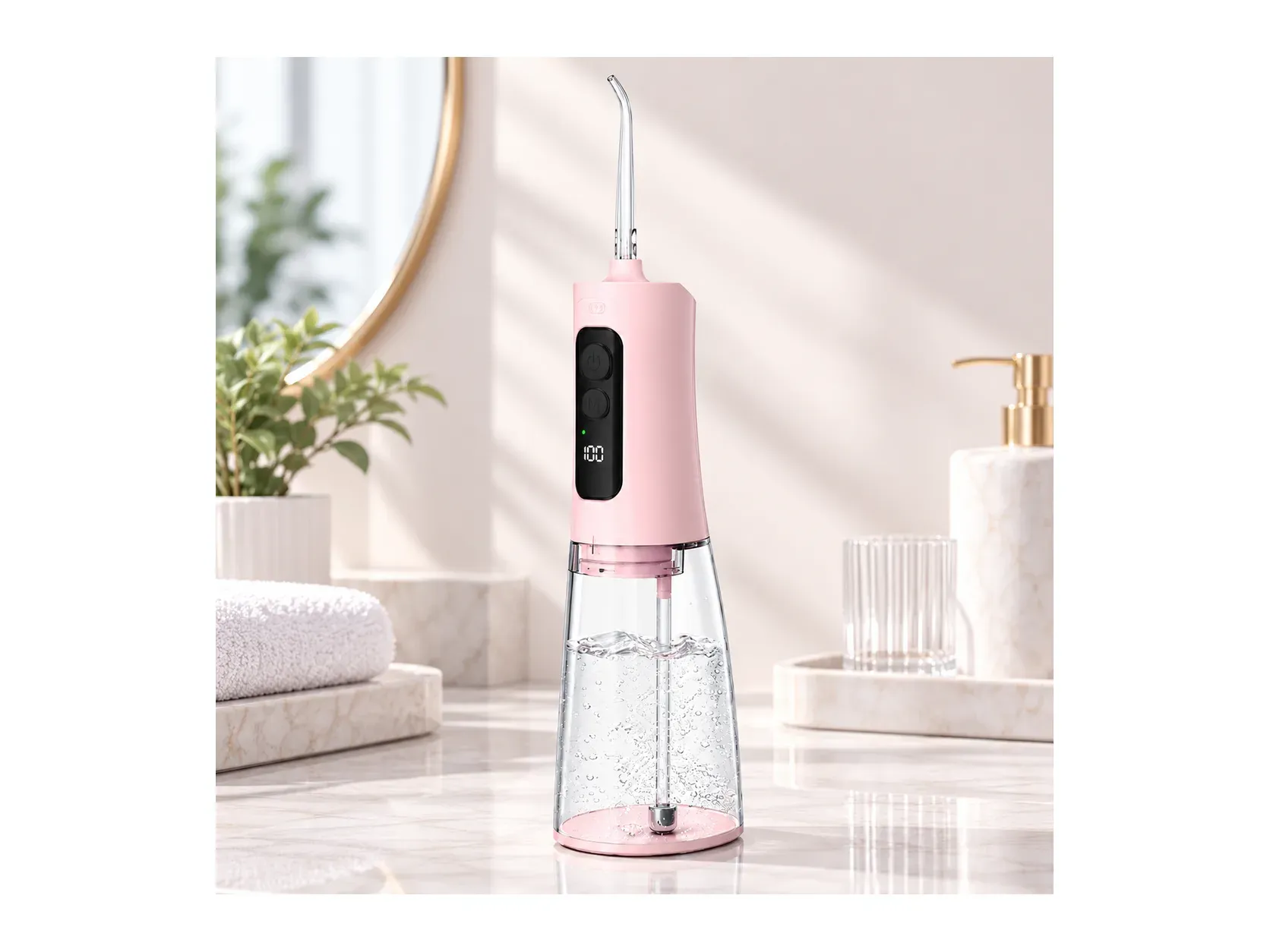
Often yes, with a different lead nozzle and different packaging. The configurations overlap more than they diverge, which is why sequencing two segments is usually cheaper than building two products. The countertop and compact arrangements in our range exist partly for that reason.
How many nozzle types should go in the first box?
Enough to make the segment's use case obvious, and no more than the packaging can explain in one line each. Four types a buyer cannot distinguish is a worse set than three they can describe, so the labelling carries as much weight as the count.
Does a portable product work as a first launch?
It can, but it usually asks for a configuration the brand has not built yet, since a smaller tank and a different body are not packaging changes. In our experience it is a stronger second product than a first one, unless travel is the segment's defining requirement.
What should the first line of packaging say?
Something factual about what the product is and who it is shaped for, without a claim about what it will achieve. A line that names the accessory and its purpose can be defended with a specification sheet. A line that promises an outcome cannot, and marketplace listing checks in some markets will ask for the evidence.
How do we know a segment is too small?
By checking whether the channel can reach it repeatedly rather than once. A segment that appears large in search volume but has no repeat purchase path will not sustain a line. In our experience the segments that sustain a brand are the ones with a recurring reason to buy, such as a household that replaces a device or a clinic that recommends the category continuously.
Next step
If you are deciding where to start, the useful information to send is short: the market you are selling into, which segment you are considering, your expected quantity and your launch timing. With those, we can say which configuration fits that segment and which nozzle set and settings range the specification supports.
Both water flossers and their documented specifications are described on their product pages, and the team can be reached through the contact page: contact our team.